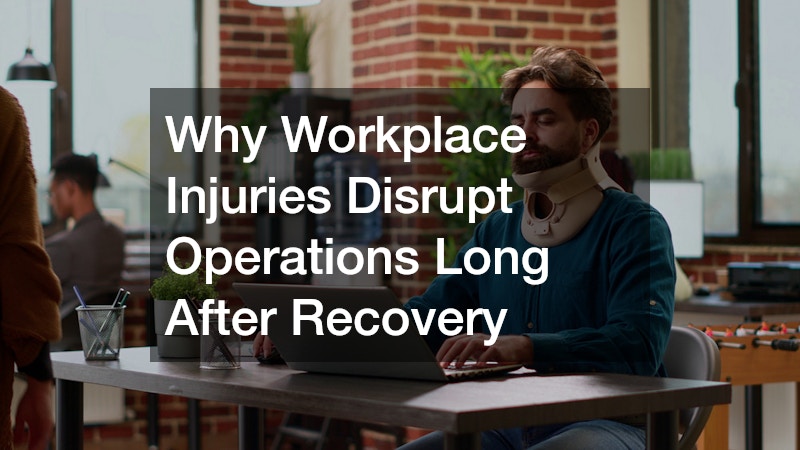
A workplace injury rarely ends when the doctor clears you to return to work. Lingering pain, reduced stamina, missed training, and shaken confidence can all follow an employee back to the job, and those ripple effects often reach coworkers, supervisors, and entire production schedules. Understanding why the disruption lasts so long after the cast comes off or the stitches dissolve can help injured workers, managers, and families make smarter decisions about recovery, paperwork, and long-term planning. This article breaks down the hidden costs and lingering effects that make workplace injuries far more complicated than a single missed paycheck.
Lingering Physical Limitations After Medical Clearance
A doctor’s release to return to work does not always mean full function has returned. “Medically cleared” is a legal and clinical threshold, not a guarantee of pre-injury capability. It typically signals that healing has progressed enough to avoid further damage, not that strength, mobility, or endurance have been fully restored. Many injuries, especially those involving joints, spinal discs, or repetitive strain, leave behind reduced range of motion, chronic soreness, or fatigue that flares under physical demands. A worker recovering from a herniated disc, for example, may pass a functional capacity evaluation but still struggle with prolonged standing or repeated bending by midshift. Similarly, rotator cuff injuries often leave a lingering 10-20% deficit in shoulder strength that doesn’t show up until a worker attempts overhead lifting for hours at a time. Workers may find themselves unable to lift, twist, or stand for as long as they could before the injury, even months later. Some report needing extra recovery time between physically demanding tasks, or relying on coworkers to handle the heaviest portion of a shared job. Others push through discomfort to avoid appearing unable to perform, which can mask the problem until a secondary injury occurs. These invisible limitations rarely appear in medical paperwork, but they directly affect productivity, safety, and the likelihood of re-injury on the job.
A worker cleared to return with restrictions—no lifting over 15 pounds, no repetitive overhead motion, limited standing time—still can’t simply slot back into their old role. Employers end up adjusting duties, shortening shifts, or rotating tasks among staff to accommodate these limits, and each of those workarounds quietly strains scheduling and productivity in ways that rarely show up on paper. When an employee cannot fully perform their original role, the remaining work doesn’t disappear. Teams either absorb the extra load, which risks burnout and secondary injuries among healthy staff, or management brings in temporary help, which adds recruiting time, training costs, and a learning curve before that person is fully productive. The financial impact compounds quickly. A single modified-duty accommodation might seem minor, but multiply it across a shift, a department, or several months of restricted work, and the hours spent reshuffling schedules, retraining coverage staff, and monitoring compliance with medical restrictions add up to a real drag on operating costs—long after the original injury claim has been closed.
- Reduced grip strength or mobility affecting manual tasks, such as struggling to lift, twist, or operate tools that require a firm hold
- Increased fatigue requiring more frequent breaks, sometimes cutting a worker’s sustainable output to 60-70% of pre-injury levels
- Pain flare-ups triggered by repetitive motion, often worsening toward the end of a shift or after prolonged standing
- Difficulty with sustained postures, like kneeling, reaching overhead, or sitting for extended periods
- Slower reaction times or reduced dexterity that can affect precision work or safety-critical tasks
- Need for modified equipment or ergonomic adjustments, from adjustable workstations to lighter-weight tools or automated lifting aids
- Reliance on light-duty or restricted-duty assignments, which can strain scheduling and cross-training needs
Retraining and Reassignment Costs for Employers
When an injured employee cannot return to their original position, companies often must retrain them for a different role or bring in a replacement worker who needs onboarding. This process eats into productivity long after the injury itself has healed, since new hires and reassigned staff typically perform below full efficiency for weeks or months.
Supervisors also spend valuable time documenting accommodations, tracking restrictions, and communicating with human resources to ensure compliance with return-to-work agreements. Small businesses in particular feel this strain, since they often lack the staffing depth to absorb a prolonged transition without falling behind on deadlines or client commitments.
- Time spent training replacement or reassigned staff
- Lost institutional knowledge if the injured worker cannot return to their prior role
- Administrative hours tracking restrictions and accommodations
- Delayed projects while teams adjust to reduced capacity
The Paperwork Trail That Outlasts the Injury
Recovering from a workplace injury involves an ongoing stream of forms, medical updates, and claim reviews that can drag on for months or even years. Many injured employees are surprised to learn that their case can be reopened if symptoms resurface or if a second opinion changes the diagnosis, which means the administrative burden rarely ends neatly with a single settlement.
This is often the point where workers comp lawyers become genuinely useful, since navigating appeals, disputed benefits, and employer pushback requires familiarity with deadlines and evidence standards that most workers have never encountered before. A misfiled form or missed deadline can delay compensation for weeks, adding financial stress on top of physical recovery.
- Ongoing medical documentation requirements
- Independent medical exams requested by insurers
- Appeals if a claim is partially or fully denied
- Wage replacement calculations that change as work status shifts
Long-Term Income Gaps and Benefit Confusion
Even after returning to work, many injured employees face reduced hours, lower pay in a modified role, or intermittent absences for follow-up treatment. These income gaps often stretch far beyond the initial recovery period and can affect household budgets in ways that are hard to predict at the outset.
For workers whose injuries result in lasting disability, understanding how workplace injury benefits interact with federal disability programs becomes essential. This is an area where social security attorneys frequently step in, helping injured workers determine whether they qualify for additional support and how one benefit might reduce or offset another. Sorting through these overlapping systems without guidance can lead to underpayment or unexpected clawbacks later.
- Reduced work hours during phased return
- Offset rules between disability benefits and other income
- Confusion over eligibility timelines
- Risk of overpayment repayment demands from agencies
Team Morale and Workplace Culture Shifts

An injury does not just affect the person who got hurt. Coworkers often take on extra tasks, adjust their own routines, and sometimes grow anxious about safety conditions after witnessing a colleague’s accident. Over time, this can lower morale, increase turnover, and create tension between staff and management over how the situation was handled.
Rebuilding trust after a workplace injury often requires visible safety improvements, transparent communication, and consistent follow-through on promised changes. Companies that treat the incident as a one-time paperwork exercise, rather than an opportunity to reassess safety culture, often see similar injuries repeat within the same department.
- Increased workload for uninjured team members
- Heightened anxiety about workplace safety
- Potential turnover if trust in management erodes
- Need for updated safety training after an incident
When Disability Overlaps With Workplace Injury Claims
Some injuries evolve into long-term conditions that qualify for federal disability benefits, especially when a worker cannot return to any form of gainful employment. Applying for these benefits involves a separate process with its own medical evidence requirements, appeals system, and waiting periods that can stretch a year or longer.
Because the standards for proving disability differ significantly from workers compensation criteria, many applicants find it helpful to consult social security lawyers who understand how to present medical records, work history, and functional limitations in a way that meets federal guidelines. Missing this distinction is one of the most common reasons initial applications get denied, adding further delay to an already long recovery timeline.
- Separate medical evidence standards from workers comp claims
- Lengthy initial review and appeals process
- Common denial reasons tied to incomplete documentation
- Importance of tracking work history and functional limitations accurately
Workplace injuries create a web of physical, financial, and organizational effects that extend well beyond the initial healing process. Recognizing these long-term disruptions early, whether through better safety practices, careful benefits planning, or timely professional guidance, can help both workers and employers avoid unnecessary setbacks. If you or someone you know is navigating a slow or complicated recovery, take time now to understand your rights and options rather than waiting for a problem to escalate.